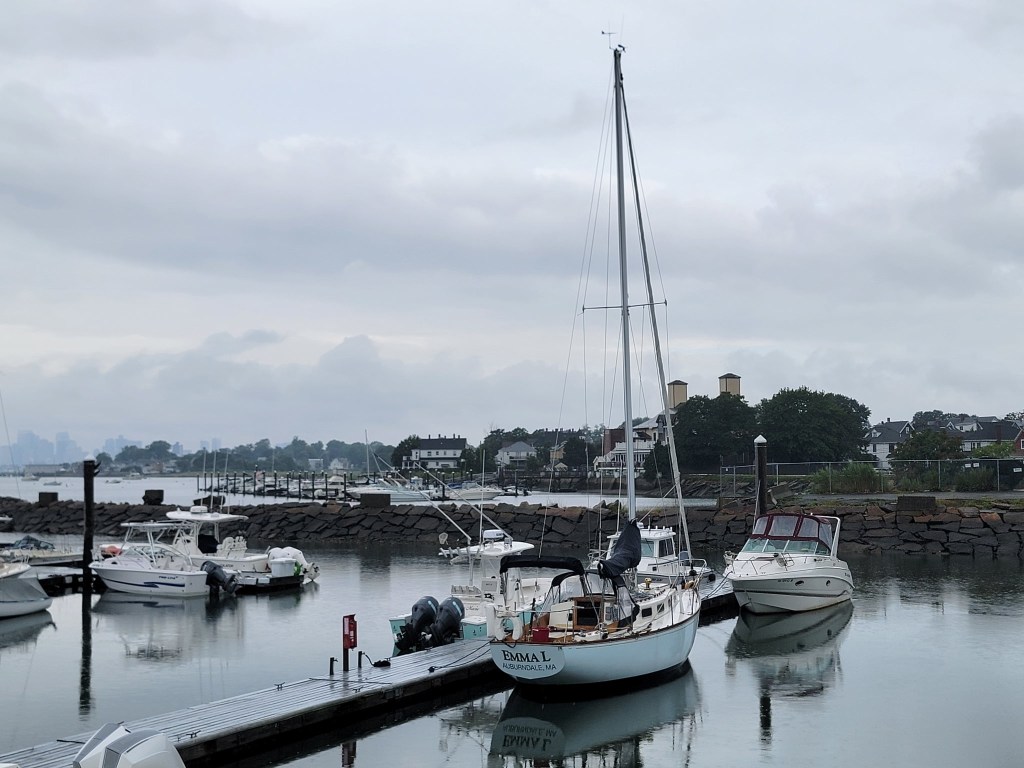
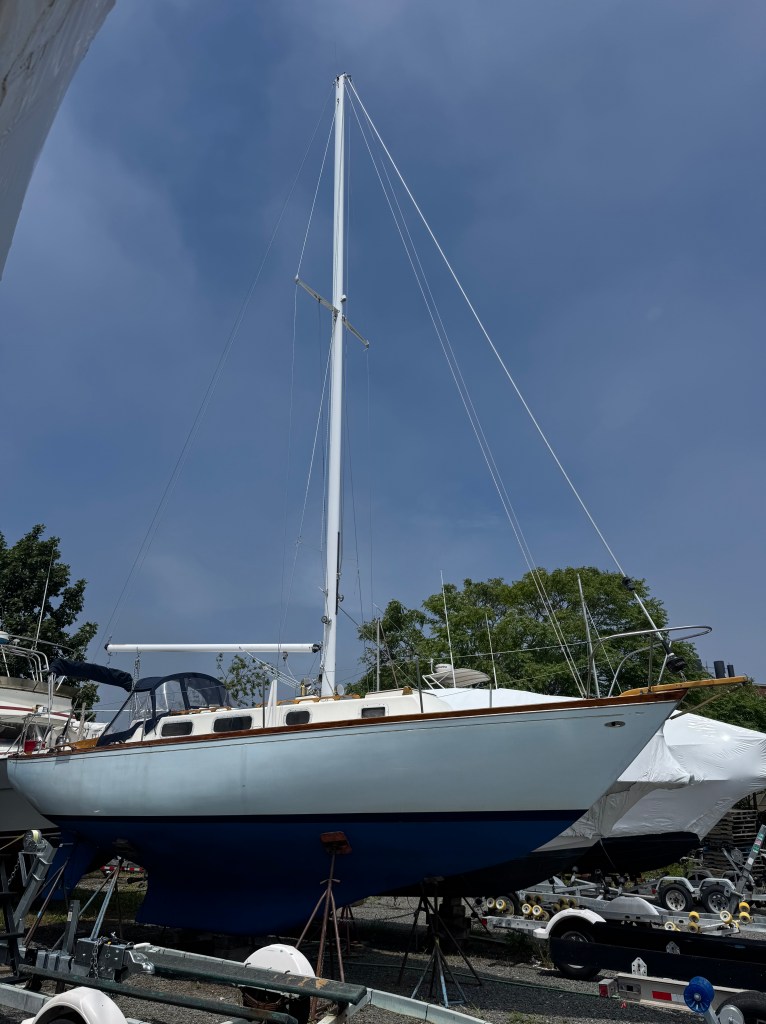
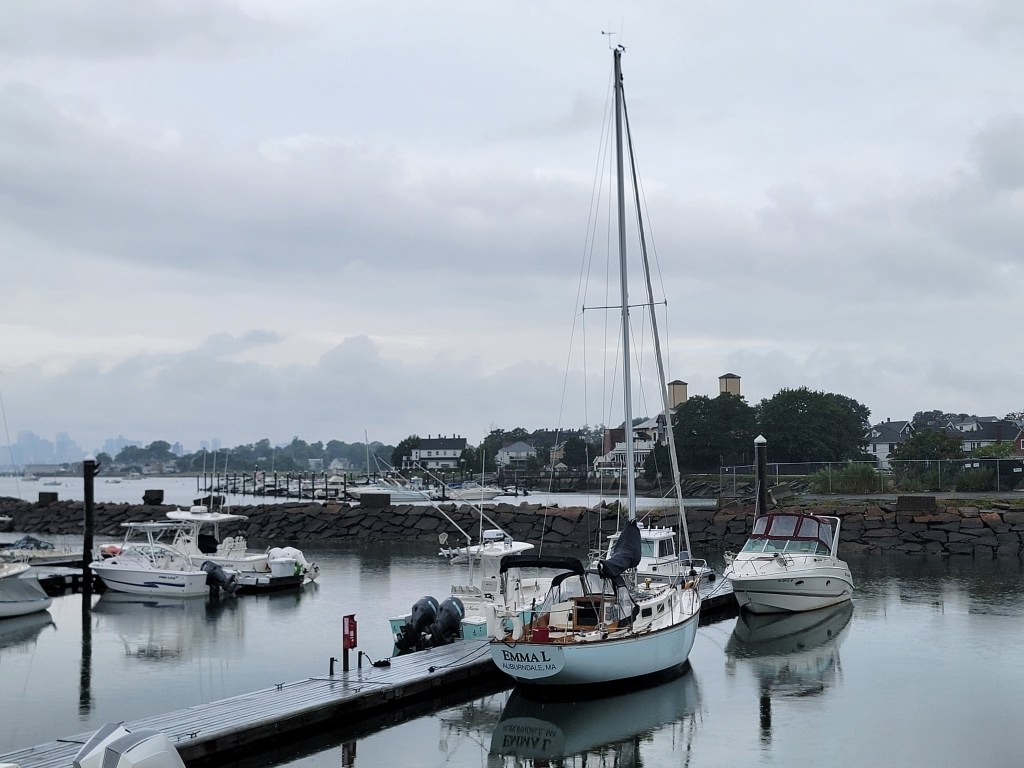
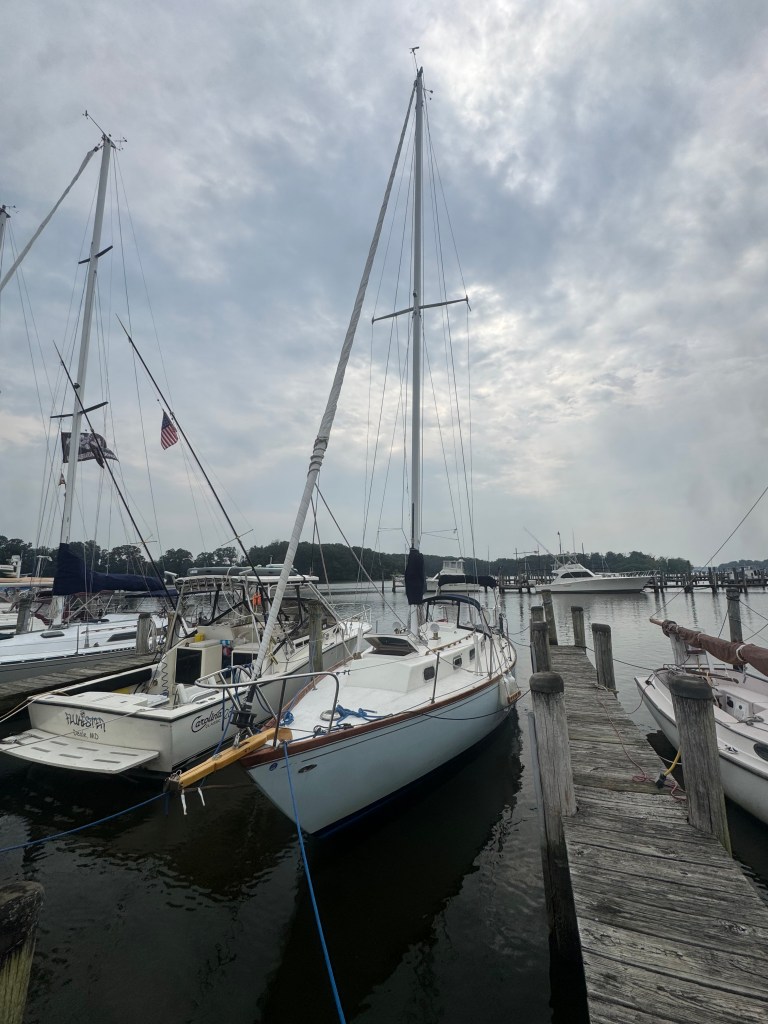
Buying a boat can be a daunting endeavor, especially as a relative beginner. Luckily, I had been able to find a boat that met all of our needs(as far as I knew), and fit our budget. The boat was a 1976 Tartan 34, a popular and well built sloop from the golden age of fiberglass sailboats. Her shoal draft & centerboard would be helpful for navigating the shallow Chesapeake Bay, and the skeg-hung rudder and semi-protected prop would be a little more forgiving of run-ins with crab pot lines. The owner had recent a recent survey, and I was impressed with his stewardship of the ‘classic plastic’ vessel. The distinctive S&S lines make for a striking figure when she lays in the water, and from my research on the boat, I expected that she’d be a joy to sail. Well thought out upgrades and maintenance was apparent throughout the vessel, and she looked smart sitting on her stands in the boatyard. The rub was that the boat lived in Boston. We had stopped to survey the boat on our way up to Maine for a summer vacation, and now I was faced with the quandary of getting the 34′ sloop home to the slip I rent on the Sassafras River, a tributary of the Chesapeake Bay, some 400+ miles away from Boston by way of navigable waterways.
There are a few ways to get a sailboat from point A to point B. The first, obviously, is to sail it – either by hiring a delivery captain or by planning and sailing the route yourself. Another option is to ship the mast and put the vessel on a tractor trailer and drive it down. Sailing a new-to-you boat can carry significant risks. Even with close inspections, there is too much that you can’t see and inspect to remove all uncertainty. There is simply a lot of things that could go wrong – and you don’t want things going wrong when it’s the middle of the night, 80 miles off the coast, nor do you want the engine quitting when you’re going through a heavily trafficked canal with 4+ knots of tidal current! There is also a fair amount of wear and tear on the sails, rigging, and engine when making passages, even when everything goes well. Trucking the boat removes a lot of that risk, but trades that risk for cost, and our budget was tight after purchasing the boat. I started calling and emailing delivery captains, checking availability, pricing, and their needs. I got a range of quotes for competent, licensed captains, ranging from a $1,200 estimate all the way up to $4,500. All of the captains I spoke with seemed competent, well credentialed, and reasonable, but a nagging voice kept whispering in the back of my head; “Just go sail your damn boat”. And I was starting to listen.
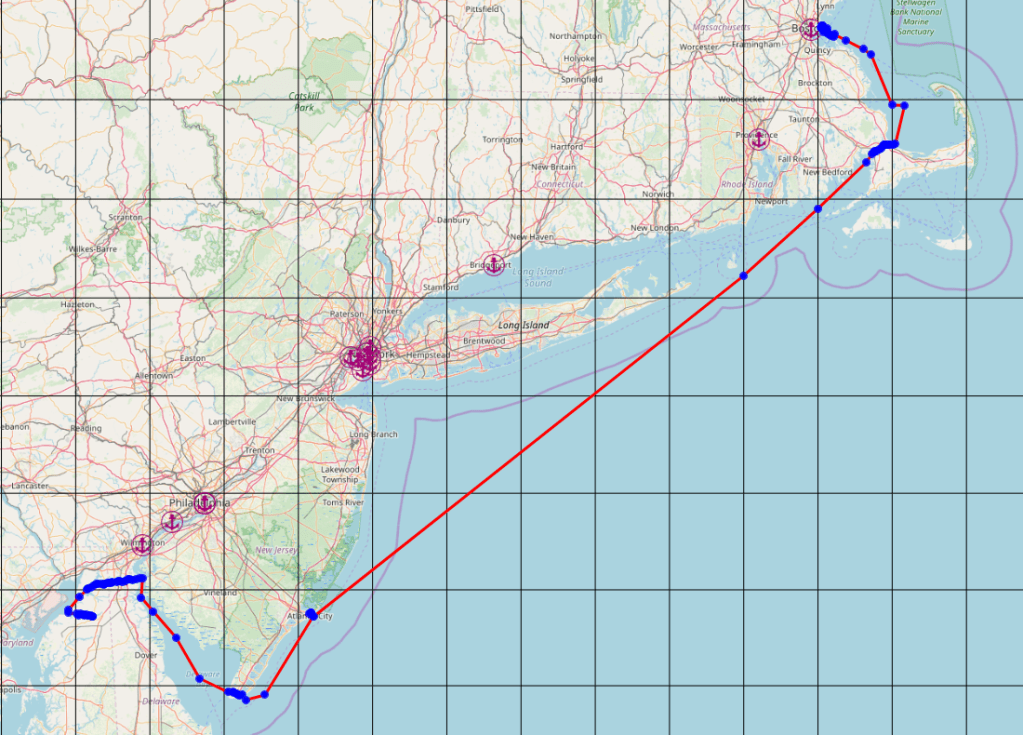
While still talking with captains, I started to research the intended route. Navigate out of Boston harbor (the boat was kept in Winthrop, so technically not Boston harbor proper, but close enough.), down the coast to the Cape Cod Canal, shoot through Buzzard’s bay and steer outside Block Island to clear into the Atlantic Ocean. Once in open water, make for Cape May, where we could round the cape and make our way up the Delaware bay to the C&D Canal. Through the C&D, and a short hop down to the Sassafras, and we’d be home. Sounds simple, right? After a few evenings of reading up on any resources I could find on sailing this stretch of coast, I called my father and pitched the idea to him. We’d rent a car and drive up on a Friday morning, provision the boat and get underway ASAP, and we should be home for dinner on Monday, Tuesday at the latest. Surprisingly, he didn’t have too many reservations. We discussed safety and emergency contingencies. I had purchased a PLB and an AIS beacon, the boat was rigged with jacklines, we had an inflatable dinghy on a painter behind the boat, and I’d upgraded the VHF to a unit which had AIS receiver capability. I’d studied the coast pilots and identified harbors of refuge if we ran into trouble. I had redundant GPS navigation and chart plotters, as well as paper charts. The only thing we didn’t have covered as well as we’d like was good, salty experience. I had not sailed outside of protected waters in more than a decade, and I’d never skippered a boat of that size, in the ocean, or for that significant of a voyage. He has more sailing miles than me, but with similar asterisks – most of his sailing had been more than a decade ago, and for the most part, on other people’s boats. Luckily, I have a colleague, Jarrod, that I’d met through our national trade organization who is a regular sailor on the great lakes, and has years of sailing experience. On a Sunday evening I sent him a text : “I bought a new boat. Want to help me sail it from Boston the the Chesapeake?” and received an immediate response: “Yes. When?”. That settled it. We were going to sail her home ourselves.
Getting the boat in the water proved to be a challenging proposition, as the boatyard owner had scheduled downtime for the launch crane(who launches a boat in mid-July), and the crew compliment had a fairly narrow schedule window we could depart in. I know the old adage goes something like “Never sail on a schedule”, but unfortunately we all have jobs, so we needed a schedule. The 3 of us were only all available at the same time for a 5-6 day window. Outside of that, I’d have to hire a delivery. The weather was another consideration – we didn’t want to sail into a gale, or bob helplessly on a flat-calm sea. We set an embarkation target of August 1, and I crossed my fingers that the crane would be ready in time. As the week of the trip closed in, the boat was still on the hard, and I was getting nervous. Some parts didn’t show up, and the crane was still in pieces. I was preparing for the disappointment of defeat, and getting ready to re-engage a delivery captain, when I got a call from the yard owner on Thursday morning – the crane was done, and they were going to test the repairs by lifting my boat. Equal parts excited and terrified, I waited for word almost all day. Finally that evening the previous owner texted me that the boat was in the water, and he’d be by in the morning to finish rigging it for me. The weather window was looking good, if not a little calm, but we had our green light – we were going to sail on Friday. My father & I drove a rental car from PA to the boat on Friday morning, stopping on the way to grab some last provisions. We arrived at the boat early afternoon, and Jarrod was already on board organizing and prepping.
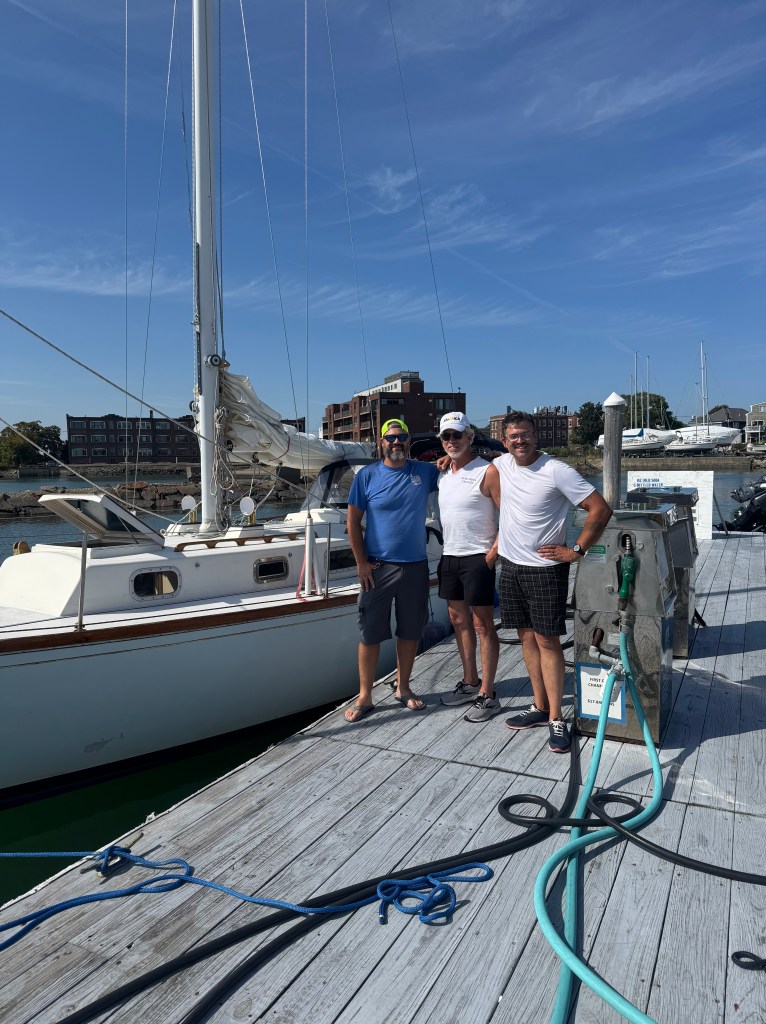
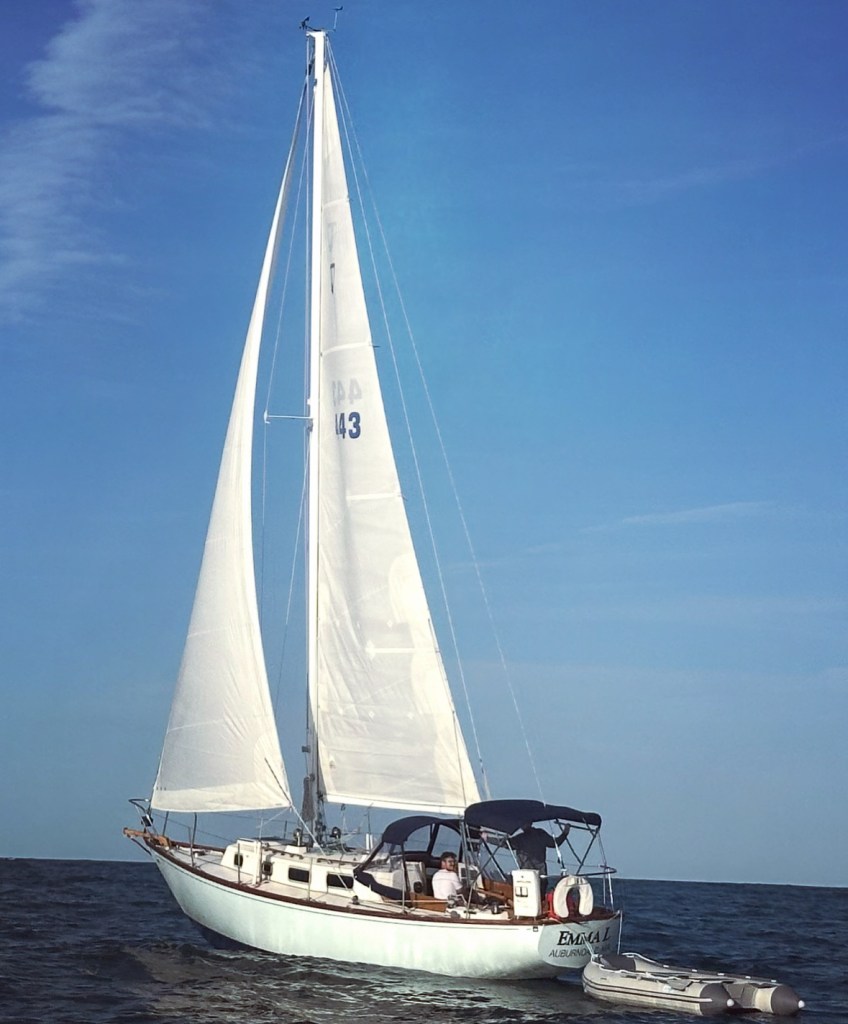
The feeling of stepping aboard your own boat and setting off on a passage is one of wildness, almost a return to some primal urge for adventure. Excitement and adrenaline mix with a little bit of self doubt and fear – what if something terrible happens? I, as master of this vessel, am ultimately responsible for the safety of my vessel and crew. Am I ready for that? Too late for second guessing now, we’re at the fuel dock topping of the 20gal gasoline tank. Marine diesels are standard fare in the auxiliary sailboat world, but my Tartar Sauce comes from a different era, one where a simple 4 cylinder gasoline powered relic of WWII engineering was prominent. The venerable Atomic 4, an engine that is either adored or loathed in the marine world, was my auxiliary propulsion source. The previous owner had taken meticulous care of the old thumper, but they were still notorious for giving up the ghost, and usually at the most inopportune time. We had tools on board to manage or replace most things that could break, but hoped we wouldn’t need them. After all, we should be sailing for the majority of the trip. So we thought.
At about 16:30 on August 1st, we set off from the dock, with the intent to make a non-stop run to my home marina. We motored gingerly out of Winthrop harbor, and hoisted the main and unfurled the jib in 5-7kt winds. We tacked around a few times to get a feel for how she steered, and made for the Narrows, a fitting name for the slim channel that cuts in between Lovell, Gallops, and Georges Islands. Once clear of the Narrows, we tacked our way E/SE, toward Cape Cod bay. We were focusing on Pilotage and we didn’t notice the yacht sneaking up on us – the previous owner and his crew had come to see us off aboard his new power yacht! After exchanging pleasantries, they headed off toward Scituate, and we stopped moving. As if on queue, the wind had disappeared, leaving us bobbing haplessly in a rather unpleasant steep, short swell. We fired the A4 back up and made our way down the Massachusetts coast, hoping to find some semblance of a breeze in the evening sky. The wind came a little after dark, but it was light & variable, and we motor-sailed most of the way down. We had a date with the tides, as we needed to hit the Cape Cod Canal with the tide in our favor. With tidal currents of 5+ kts, if we missed our window to transit, we’d have to loiter for hours waiting for the slack current. With the help of the motor, we timed entering the canal perfectly with the current turn and daybreak. We made quick work of the canal transit as a light fog burned off of the water around us and the Saturday sun rose in the sky.
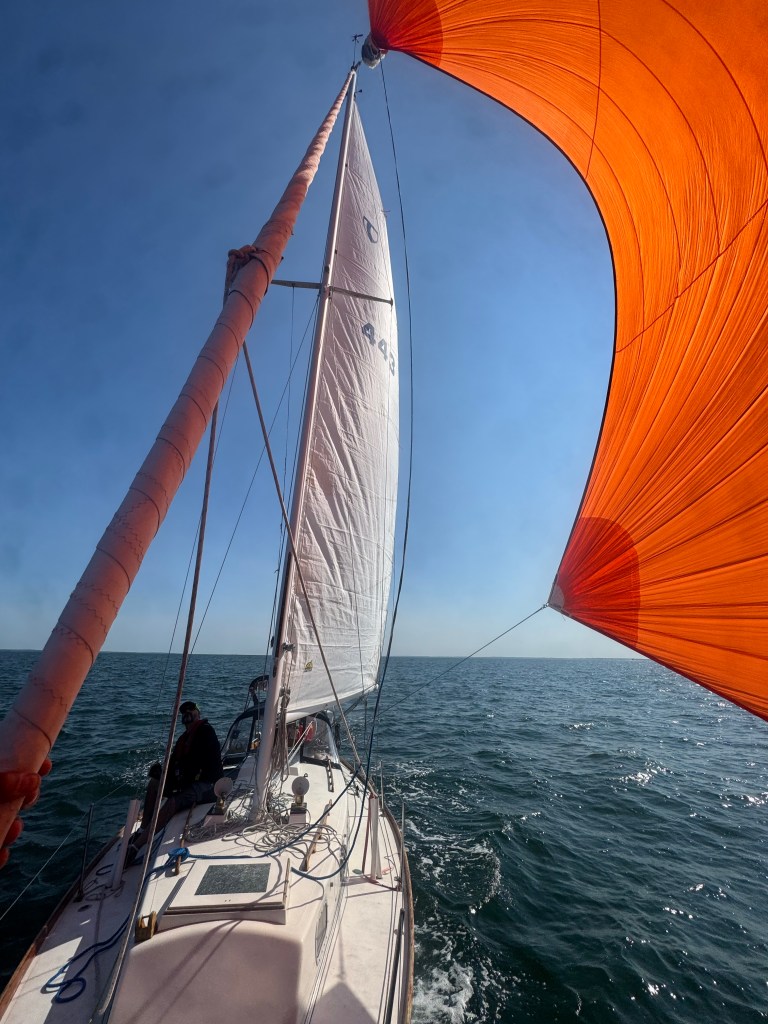
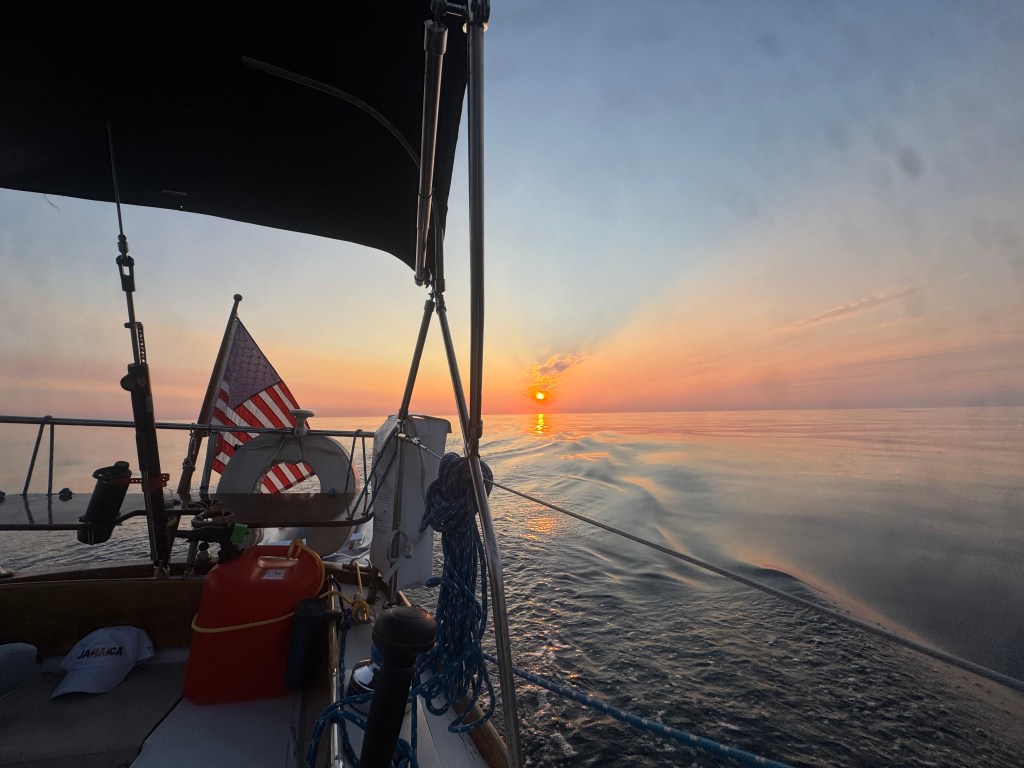
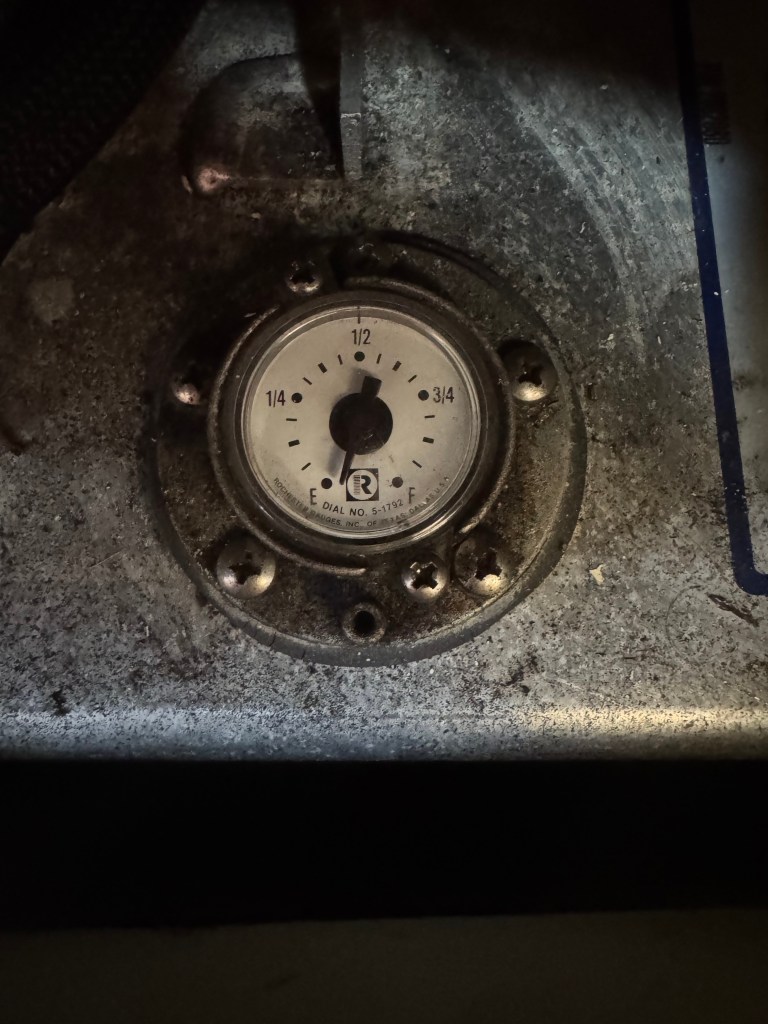
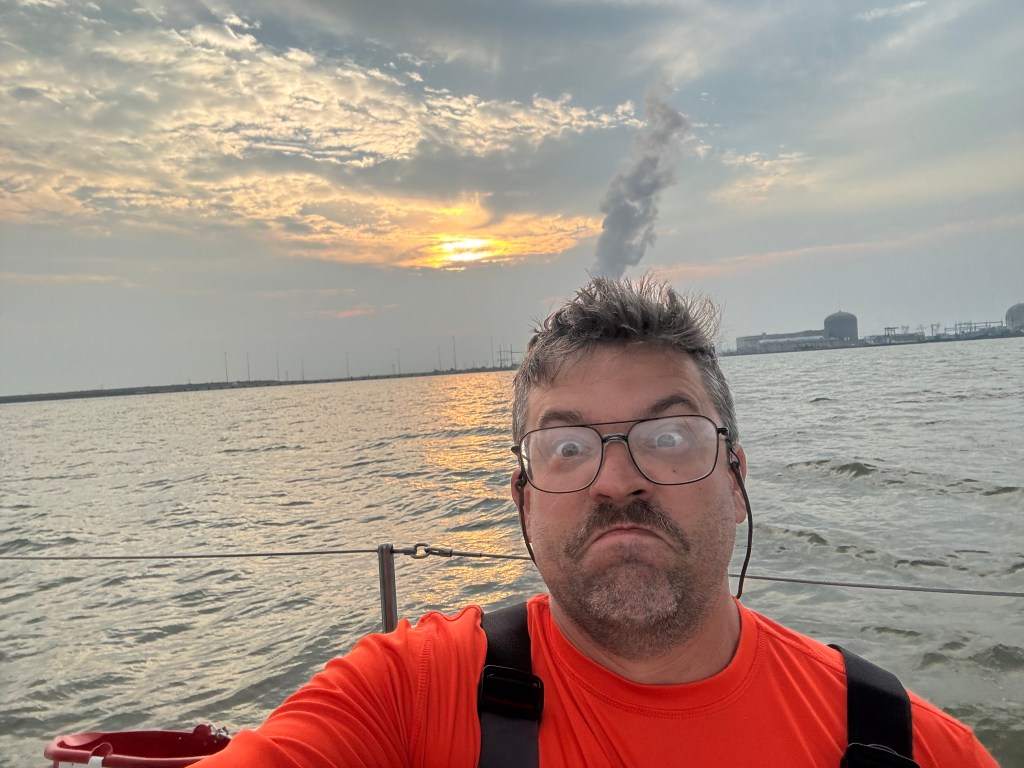
We exited the canal into Buzzards bay, and were dismayed to find that there wasn’t much wind over on this side of the cape either. There was a bit of wind, though, and we hoisted the asymmetric spinnaker we were able to deep reach at a not unreasonable pace. We were treated with a horizon of canvas, as the field of NBYC’s annual regatta stormed(as much as one storms in 5kts of wind) about the bay, colorful asyms and code zeros flying proudly. By the afternoon, we were clearing out of the bay into the Atlantic ocean proper, and the wind was again disappearing. Iron jib unfurled again, we clattered our way through glassy water through the night and into Sunday. The sun rose on a glass flat ocean as far as we could see. Not even a ripple of breeze graced our deck all day. We were surprised to see as many single engine center console boats as we did, considering we were 50+ miles from shore. Another surprise is the biting flies that far offshore – apparently New Jersey biting flies are known to get blown offshore to terrorize becalmed sailors. As Sunday evening progressed with no wind to help us on our way, a new concern emerged. We’d now been motoring for close to 23 hours. The fuel burn data I’d looked up on the internet estimated a fuel burn of about 1gal/hr for an atomic 4. I calculated our burn at about .75gal/hr thus far. I had a 5 gallon jerry can of fuel as backup, but if we had to motor all the way in to land, we were pushing the limit. We decided to alter our course to Atlantic City to stop for fuel. At the first indication of a breeze blowing in early Monday morning, we killed the engine and sailed right up to the inlet at AC before firing the motor back up. We swung into the harbor and pulled along side the fuel dock with only a little bit of swearing – remember, I’ve never docked this boat or another boat this big before. After we shut the engine off, I checked the gauge on the tank – bone dry. We had literally made it to the fuel dock on fumes.
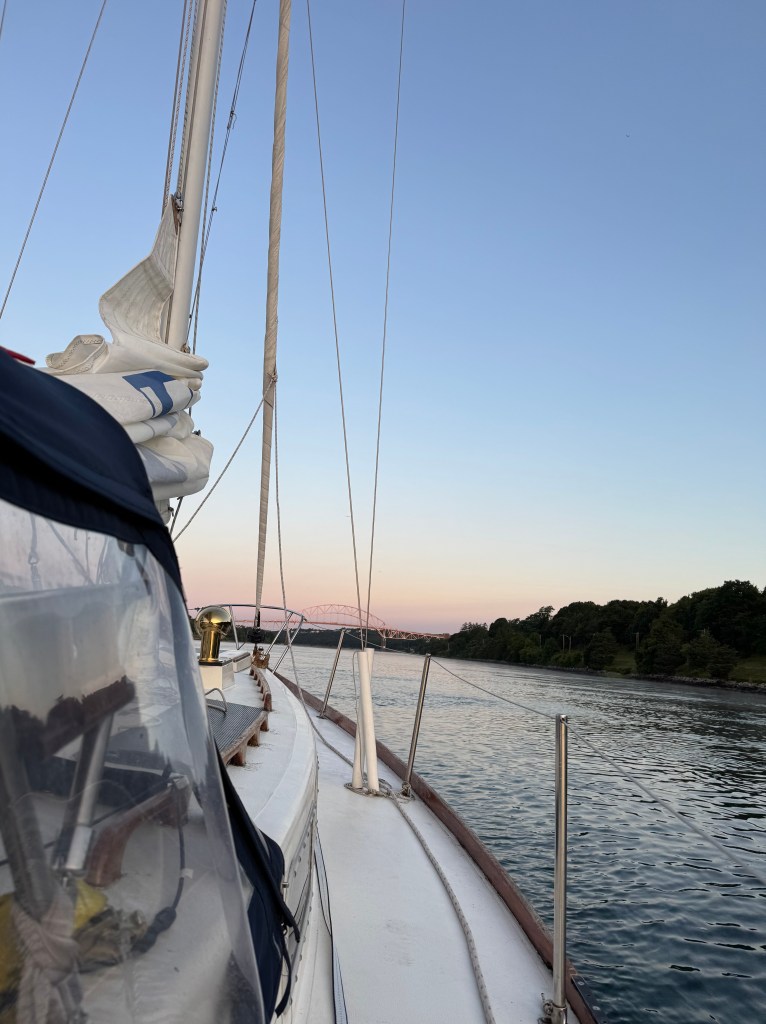

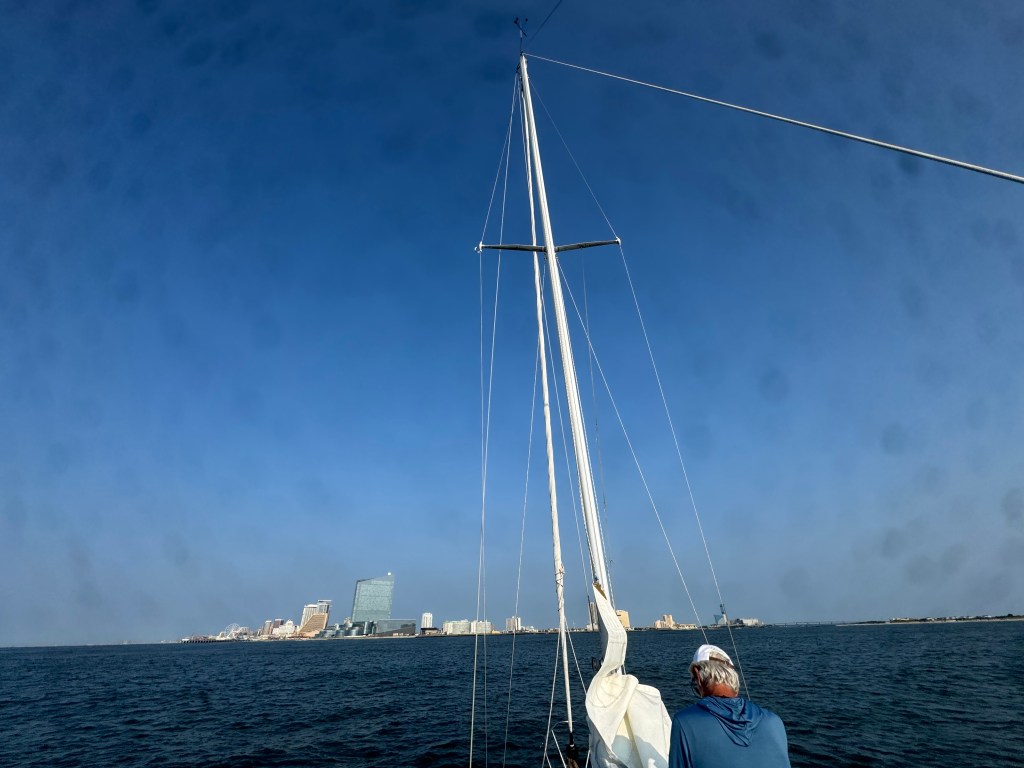
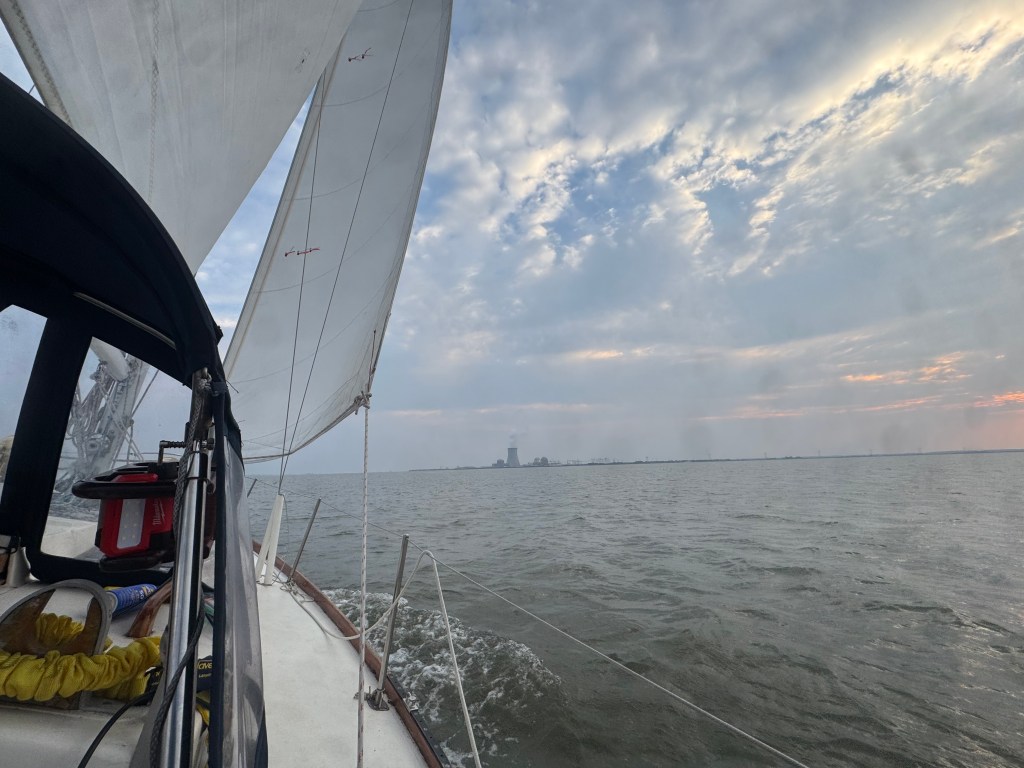
Fueled up and reinvigorated, we set off again toward Cape May. A pleasant offshore breeze put us on a comfortable starboard tack down the New Jersey coast for the better part of the day. As we made our way down the coast, we decided to transit the Cape May canal instead of going around all the shoals in the mouth of the Delaware Bay. It would be motor time, but we weren’t confident in the wind, and if we stayed the course around the cape, we’d have to pilot the boat into the bay under darkness, which only adds to the uncertainty. We entered the canal in late afternoon and enjoyed a quiet and scenic transit of the canal. We shot out the other side, and with no wind to greet us, we began motoring up the bay. The wind returned in the wee hours of the morning, and by daybreak we were making 8kts SOG. We rode that tack up to the C&D canal, passing a fleet of Naval Academy boats making their way down the bay. We made our way through our third canal of the passage, and entered the Chesapeake Bay around lunchtime on Tuesday. Once again we found no wind on exiting the canal, so we continued under power toward the Sassafras. The wind returned briefly when we made our way up the river, but at that point we had all fallen into the horse to the barn trap, and we just wanted to be off the boat.
We pulled into my slip at 4:00PM on Tuesday, almost exactly 96 hours after we’d departed. The boat performed flawlessly, and the Atomic 4 earned my respect. We made the boat fast, showered, and made a bee-line for the dockside bar up the road where we enjoyed a cold beer and a good burger. Our maiden voyage on my boat had been a success. We delivered the boat with all parts of crew and vessel intact and none worse for the wear. Now our sailboat journey can really begin.

 Not Quite An Expert
Leave a comment